UV tattoo – phenomenal effect or risky experiment
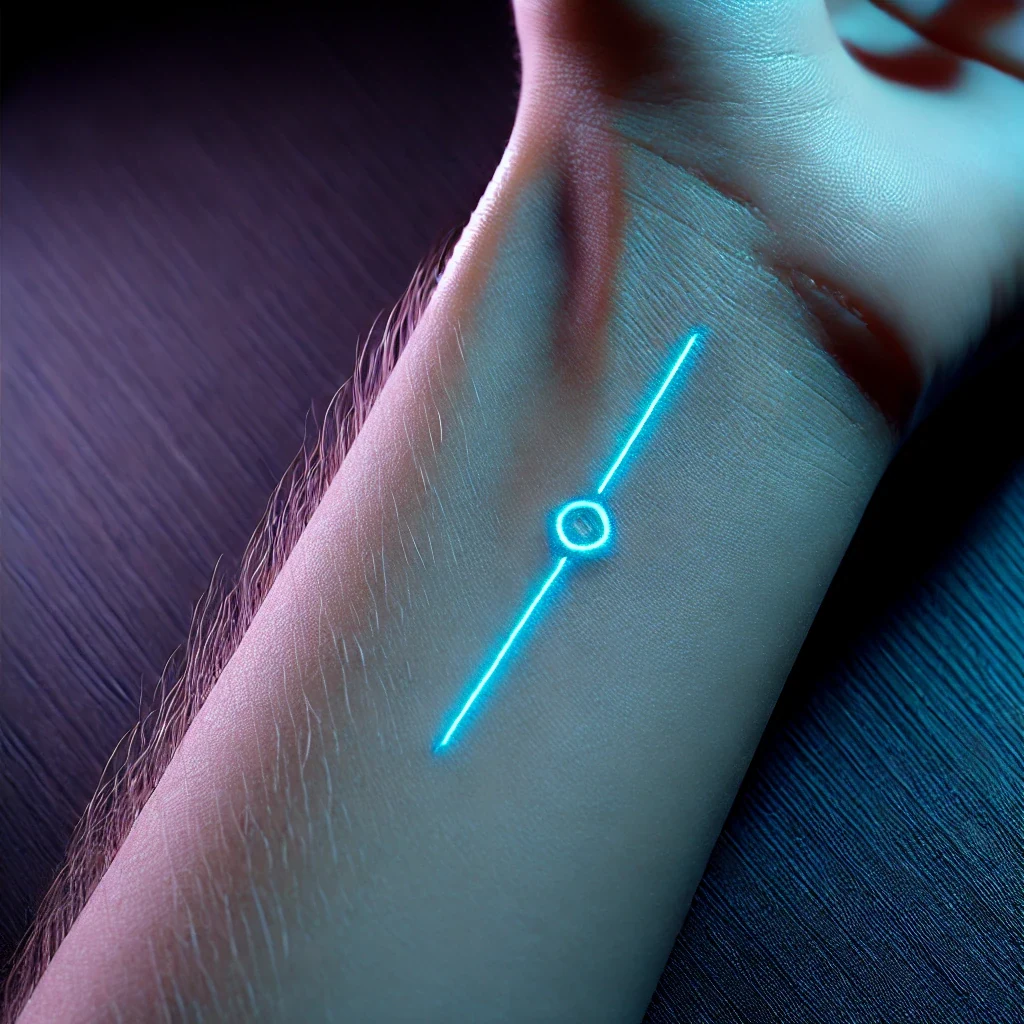
UV tattoos have been drawing the attention of everyone looking for a special piece of skin jewelry in recent years. They glow in the dark under special ultraviolet light, stand out during the day with a subtle color, or are almost invisible. This unusual art form doesn’t just spark fascination — it also raises questions about safety. Is a UV tattoo a passing trend, or the future of body art?
WHAT WILL YOU LEARN FROM THIS ARTICLE?
The topic discussed here sparks curiosity because of its uniqueness. In the following paragraphs we dive into various aspects of this concept, paying attention to both the controversies and the scientific insights.
- How do glow-in-the-dark tattoos work, and what makes them visible under a UV lamp?
- Which chemical compounds are responsible for their fluorescence, and what does the scientific world say about them?
- What do UV tattoos look like on social media, and what does the reality in the studio look like?
How do ultraviolet tattoos work?
Ultraviolet tattoos are designs made with special pigments that react to UV radiation (ultraviolet). Their special feature is that in daylight they’re barely visible, or look like a delicate pastel color. The real “show”, however, starts under ultraviolet light, when the dyes begin emitting fluorescence, creating spectacular effects in clubs, at concerts, or other places with black-light lighting.
Chemical compounds in UV tattoo ink
From a chemical point of view, the presence of luminophores matters – substances that convert UV radiation into visible light. The popular term “fluorescent tattoo ink” can be misleading, because the actual mixture of dyes is often complex and not always fully disclosed by manufacturers. Moreover, it’s not always known how pure they are and what skin reactions they can cause, especially with prolonged exposure to light.
Many tattoo artists stress that when choosing an ultraviolet tattoo, it’s important to use a reliable source of pigments. The tattoo industry is, after all, poorly regulated when it comes to certification of this kind of ink, which increases the risk of using untested ingredients.
Safety and potential dangers of fluorescent tattoos
Questions about safety usually come up when technological novelties catch the industry and consumers off guard with a lack of extensive scientific research. Despite growing interest, fluorescent tattoos still lack coherent, long-term reports assessing the effect of the dyes used on the body.
The effect of UV radiation on the skin and the tattoo
Although UV radiation itself is used in dermatology (e.g. in phototherapy lamps), longer or intense exposure can cause skin irritation, redness or allergic reactions. In the context of ultraviolet tattoos, this is an extra factor – the pigment may react differently under the influence of radiation.
Some dermatologists point out that there’s a lack of broad research into the long-term wearing of dyes that react to UV radiation. There’s a suspicion that certain ingredients, especially in cheap and uncertified inks, may cause discoloration or other unwanted effects over time.
Lack of long-term analyses
When it comes to safety, UV tattoos remain in a zone of question marks – a tattoo in itself is already an intervention on the body, and fluorescent pigments bring an extra element of uncertainty. Many studios that want to preserve their professional responsibility indicate that by choosing such a design, the client takes on certain risks tied to the unpredictability of future effects.
There’s also an opinion circulating in the industry that certain ingredients of previously used phosphorescent inks could be toxic. Today newer formulas exist, but questions remain about the lack of approval and clear certificates guaranteeing safety.
Quality and origin of fluorescent tattoo ink
With classic tattoos, the most popular inks have a certain level of regulation – manufacturers try to comply with the requirements of European markets, including, for example, REACH regulation, which controls chemical substances on the market. With UV dyes, the matter is much more complicated.
The problem with regulation and approval
UV tattoo is still a young market when it comes to coherent standards. It’s hard to find a manufacturer that guarantees 100% safety of glow-in-the-dark pigments. European regulatory bodies haven’t yet issued clear guidelines on the use of UV pigments in tattoos, and the absence of certain certificates can mean that artists rely on suppliers’ own claims.
Price versus quality of a UV tattoo
High-quality fluorescent inks are often more expensive than standard pigments. It’s also undeniable that the price of UV tattoos can be higher, because by choosing these dyes the tattoo artist invests not only in the material itself, but also in better lamps and safety testing.
Because of this, keep in mind that the cost doesn’t just cover the procedure itself, but also possible follow-up check-ups (for example in case of allergic reactions). Unfortunately, it does happen that an unusually low price means the use of dyes of questionable quality.
Reality versus social media – what does a glow-in-the-dark tattoo actually look like?
More and more often we see stunning photos online where a glow-in-the-dark tattoo seems to shine with a magical glow. Videos or photos on social media emphasize the effect thanks to the right filters and strong UV lighting. Unfortunately, the result in reality can be less spectacular, and uneven distribution of the ink can be visible.
Filters versus real life
The phenomenon of fluorescence is hard to capture in natural light. To make a UV tattoo look like it does on Instagram, professional lamps and image-editing software are often used, which creates a somewhat unrealistic picture. People looking for inspiration online should remember that what we see online doesn’t always reflect the authentic look of the tattoo under everyday conditions.
Is a UV tattoo worth it?
When considering such an unusual design, it’s good to look at a broad range of aspects – from artistic motivations to future health consequences.
Possible benefits and uniqueness
For many people, the “wow” effect is crucial. Ultraviolet tattoos are original, draw attention in places with black-light lighting, and often become a distinguishing feature that makes the owner stand out in the crowd. For artists, such projects are often an intriguing challenge, requiring knowledge of specialized inks and a creative eye for the pigment-application technique.
On the other hand, so-called hidden tattoos are also gaining popularity these days – their value lies in discretion during the day, and a spectacular glow at night. People who need to maintain a professional appearance at work may be tempted by a tattoo that’s only noticeably visible under the right conditions.
Potential risks
The decision for a UV tattoo requires understanding the lack of long-term research. Scientists haven’t yet spoken with one voice on whether these dyes are fully safe in the long run. There are indeed reports that newer generations of inks are less toxic, but we don’t know for certain how the skin will react to prolonged contact with this kind of pigment.
All these question marks around a tattoo tend to create resistance among cautious people, who prefer tried-and-tested forms of body decoration. So if someone values certainty and safety, a standard tattoo may be the better solution.
Real opinions from tattoo artists and enthusiasts
In Poland, a growing group of people are interested in glow-in-the-dark designs, but at the same time local artists often report that they don’t do them, or only rarely – precisely because of the lack of reliable certificates. Still, examples can be found on social media of satisfied clients who stress that their UV tattoo still looks good after years and hasn’t caused major skin problems.
Benefits:
- Extraordinary aesthetics under ultraviolet lighting.
- The possibility of creating unique projects.
- Subtlety of the design during the day (for people who love discreet tattoos).
Drawbacks:
- Hard-to-predict reaction from the body.
- Higher price and a longer search for a reliable studio.
- Lack of long-term research results and regulation.
Ultimately, everyone has to weigh the pros and cons of such a choice for themselves.
Consult the specialists at Jungle Tattoo studio in Tilburg!
If you’re considering getting a tattoo (big or small), remember that a professional consultation is key to making the right decision. At Jungle Tattoo studio in Tilburg you’ll meet an experienced team of tattoo artists who approach every client with full commitment. Using specialized knowledge and reputable inks, they help you choose a design and plan the process so you feel safe at every stage. Thanks to a mindful approach and attention to hygiene standards, you can be sure that your tattoo adventure will be a success – both artistically and health-wise.
Bekijk ook:
Of:
Aanbevolen berichten:
UV tattoos have been drawing the attention of everyone looking for a special piece of skin jewelry in recent years. They glow in the dark...

The process of getting a tattoo can be enormously exciting, but also full of questions and doubts. In this article we look at the main...

A tattoo cover-up is the process of transforming unfortunate designs into a new work of art, making it possible to improve a failed tattoo without...
Book an appointment and make your dream tattoo a reality!
Make your dream of a unique tattoo come true! Book an appointment at our studio today and create a design together with us that expresses your personality forever.
Don’t wait any longer – this is the first step toward realizing your artistic vision!